The Challenge
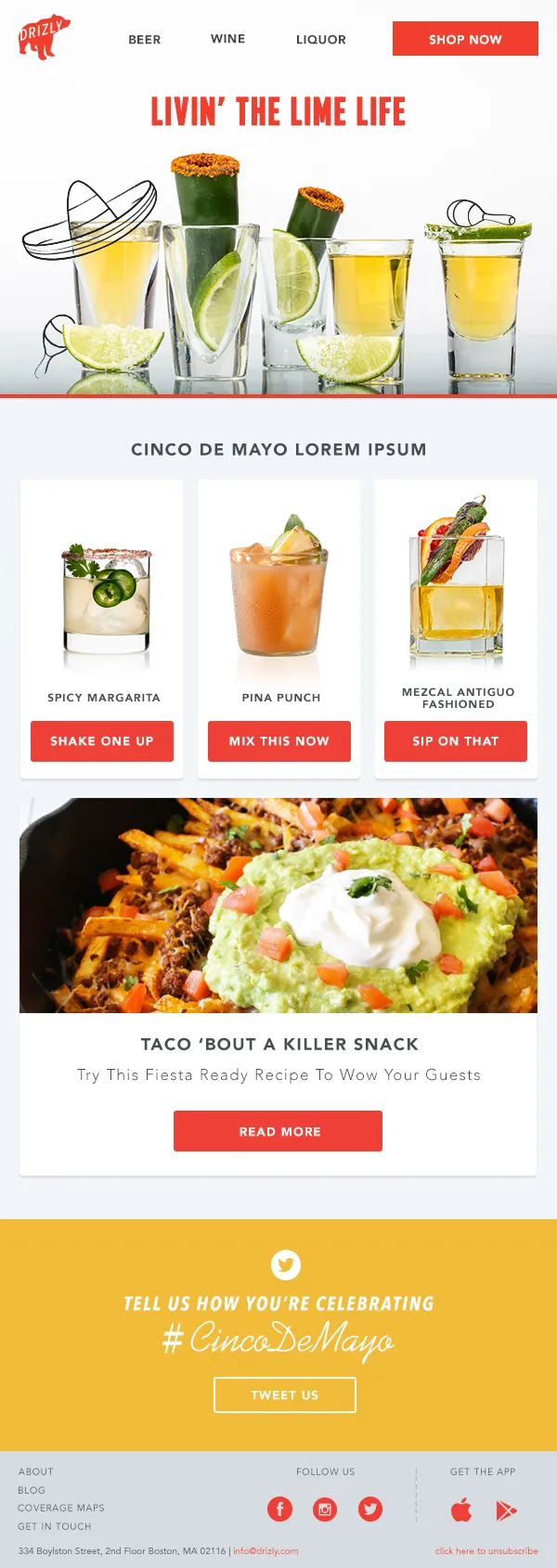
As freelance partners, Rachel and I worked with a national beverage delivery marketplace that produced a high volume of promotional and lifecycle email campaigns.
We had already been designing and coding emails for the company, including recurring campaigns, seasonal promotions, and a monthly editorial calendar. Although each campaign was different, many used the same layouts, content patterns, and brand elements.
Every email still required design, development, testing, and deployment work. That made routine campaigns expensive to produce and dependent on outside design and development support.
We proposed a component-based email system that would standardize the visual language, reduce repetitive production work, and allow the marketing team to build campaigns from tested, approved components.
Defining the Design System
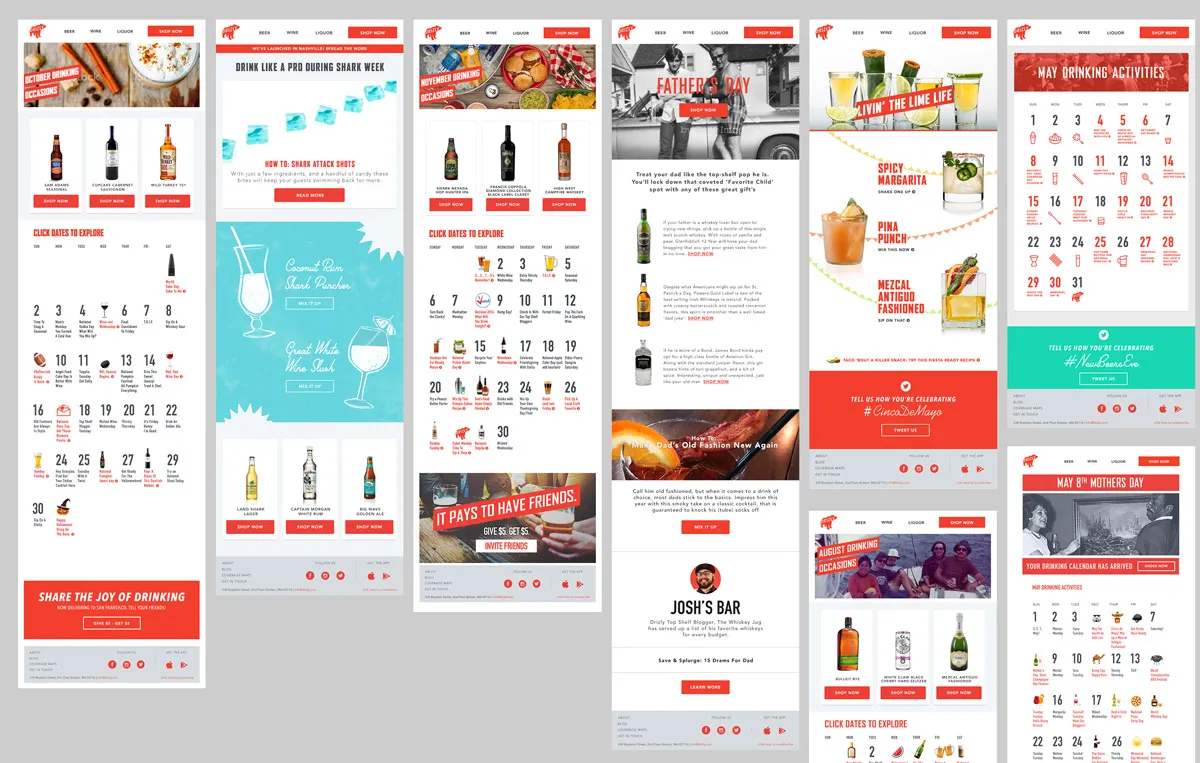
Rachel and I reviewed the existing campaign library and identified the structures that appeared repeatedly across the company’s emails.
We consolidated those patterns into a library of roughly a dozen reusable templates and components. These covered common content needs such as promotional features, product grids, editorial sections, calls to action, headers, footers, and campaign-specific messaging.
The goal was not to make every email look the same. We wanted to create a flexible system that preserved the brand while giving the marketing team enough variation to build distinct campaigns.
Rachel focused on the visual system and campaign design, while I translated those patterns into reusable, production-ready email components.
Building Reliable Email Components
HTML email development comes with strict technical constraints. Components need to render consistently across desktop, mobile, webmail, and older email clients while meeting the requirements of the company’s delivery platform.
I coded and tested each component before integrating it into the builder.
This created a dependable library of reusable patterns that did not require the full development and quality assurance process to be repeated for every campaign.
By standardizing the markup, spacing, typography, and responsive behavior, we also reduced the inconsistencies that often appear when emails are designed and coded individually.
Creating the Email Builder
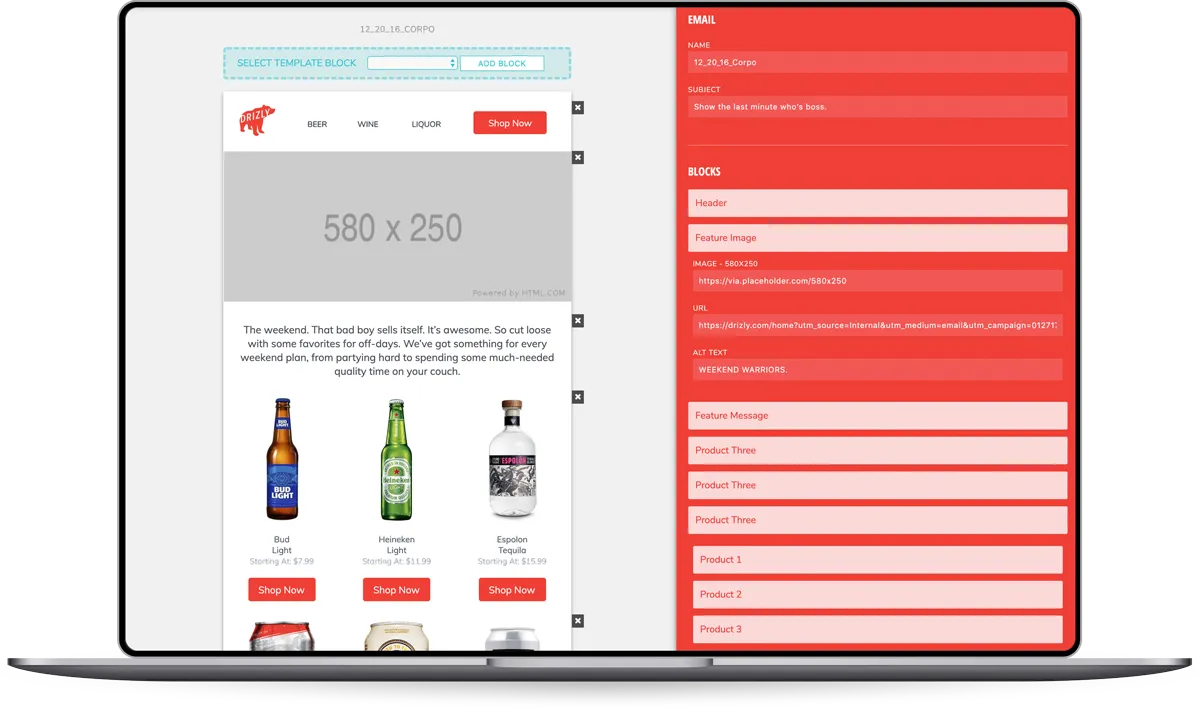
I designed and developed a custom application that allowed the marketing team to assemble complete emails from the component library.
The interface supported:
- Drag-and-drop component arrangement
- Visual content editing
- Real-time campaign previews
- Reusable templates and content patterns
- Production-ready HTML export
- Litmus testing
- Deployment through the client’s email marketing platform
Users could select the components they needed, arrange them into a campaign, populate the content, and preview the result without editing the underlying HTML.
Connecting Design and Production
The builder connected the design, development, and marketing workflows in a single system.
Rachel could define and extend the approved visual patterns. I could code and test those patterns once. And the marketing team could reuse them across campaigns without commissioning a new custom build for every email.
This shifted routine production away from one-off freelance work while preserving a clear path for custom design and development when a campaign required something outside the existing system.
The Result
The email builder reduced the time and cost required to produce marketing campaigns while improving consistency across the company’s email program.
The marketing team could assemble routine campaigns from tested components without relying on a developer for every update. And we could focus our freelance work on new components, higher-value campaigns, and improvements to the system rather than repeatedly rebuilding familiar layouts.
The result was a faster production process, a more consistent visual language, and an email system that could scale with the company’s marketing needs.